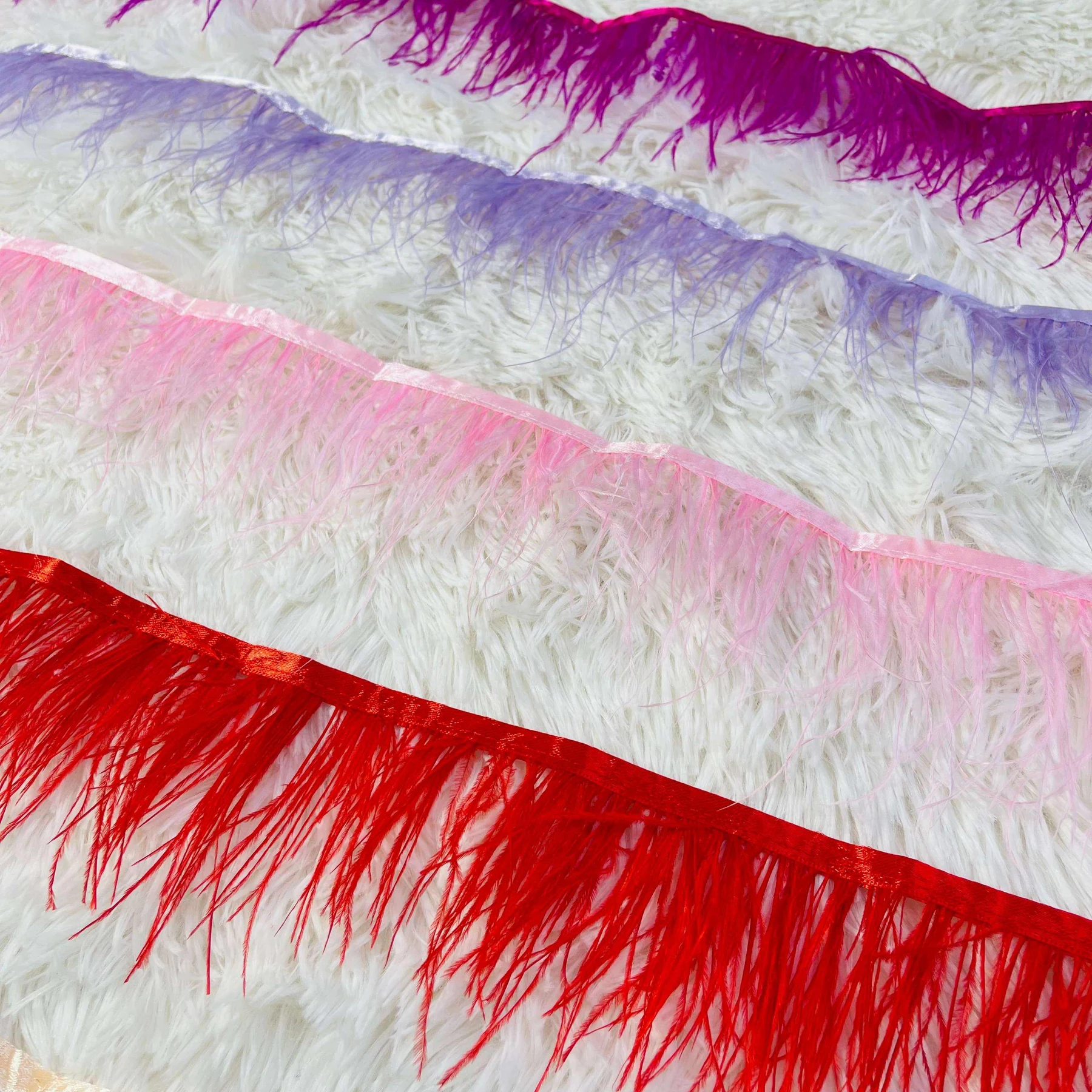
Feather Trim vs Lace Trim: What Should Buyers Choose?
Compare feather trim and lace trim for dresses and garments, including visual effect, placement, handling considerations and B2B sourcing decisions.
Feather trim and lace trim serve different design directions
Feather trim and lace trim can both be used as decorative garment details, but they typically create different visual effects. Feather trim may add softness, movement and dimensional volume. Lace trim may add a patterned textile edge, visible motif detail or a more continuous decorative line. Neither direction is automatically better for every collection. The most suitable choice depends on the final garment style, placement, base fabric, desired texture and the practical requirements of production.
Compare appearance, texture and placement
A feather trim may suit a dress, sleeve, hem or accessory when the design needs a tactile or expressive edge. Lace trim may suit necklines, cuffs, veil edges, seams or borders where a continuous patterned textile detail is required. In some fashion or eveningwear programs, the two directions may be used separately across coordinated pieces. Buyers should evaluate the actual trim image and dimensions against the garment pattern rather than relying on material names alone.
Handling and sourcing considerations
For either decorative trim, sourcing teams should confirm the product code, quantity, price unit, published dimensions, packing and lead time. Feather trim may require attention to the intended visual density, placement and coordination with the garment surface. Lace trim may require attention to usable width, repeat direction and how the edge will follow the garment line. These are general planning points; exact requirements depend on the selected product and construction.
Choose according to the finished product
A fashion collection that needs movement, softness or a statement decorative effect may begin by reviewing feather trim. A collection that needs a patterned lace edge or textile border may begin with lace trim. Bridal, eveningwear and costume applications can vary widely, so selection should be based on the actual garment brief. Sharing the garment sketch, intended placement, quantity and color direction gives the supplier enough information to guide a practical comparison.
From comparison to quotation
YUGU lists feather trim and lace categories for international garment and fashion buyers. Once a preferred direction is selected, send the relevant product code, quantity, application and delivery country through the inquiry form or WhatsApp. For suitable bulk projects, the team can review a custom color, size, pattern arrangement or OEM or ODM requirement without making assumptions about the selected style.
Feather Trim vs Lace Trim
Buying point
Feather trim
Lace trim
Typical visual effect
Soft, dimensional or movement-focused decoration.
Patterned textile detail or a continuous decorative edge.
Common placement
Dresses, sleeves, hems, accessories and statement garment details.
Necklines, cuffs, hems, veil edges, seams and borders.
Selection focus
Color direction, apparent density, placement and garment compatibility.
Usable width, motif repeat, edge direction and garment line.
Sourcing approach
Review the actual style against the intended visual effect.
Review the actual pattern and edge against the planned garment placement.
Information that helps suppliers respond accurately
For a smoother sourcing conversation, provide the product code or reference image, the intended application, required width, target quantity, preferred color and delivery destination. This information lets a supplier consider both visual suitability and commercial details. If a garment collection includes multiple trims, list them together and note which styles must coordinate. It is also helpful to identify the person responsible for technical approval and the person responsible for purchasing, since design preferences and order confirmation often involve different questions.
Avoid common purchasing mistakes
Do not select lace only from a close-up image without confirming usable width, material and pattern scale. A trim can look appropriate on screen but feel different when placed on a full garment. Do not wait until the final order stage to ask about MOQ, lead time or custom color feasibility. Early confirmation makes planning more reliable. Keep the agreed product code and key specifications in written communication so production, quality inspection and shipping discussions remain linked to the same requirement.
Plan for repeat orders
For repeat programs, save the approved product code, color direction, width, packing preference and order history. This gives future purchasing teams a practical reference when a collection is replenished or expanded. Where several garment styles use a coordinated lace family, record how each trim is applied and which fabric it is paired with. A structured record supports more consistent reordering and gives the manufacturer a clearer picture of the buyer's ongoing production needs.
Next step for global buyers
YUGU works with global garment manufacturers, bridal dress suppliers, fashion brands and wholesalers seeking practical lace sourcing support. Browse the relevant category, select suitable product codes and send an inquiry with your quantity and reference images. For qualified bulk orders, our team can discuss OEM and ODM options such as custom colors, widths and design directions. The best next step is a concise, well-prepared inquiry that connects your design objective with the production details needed for a quotation.
Buyer FAQ
Feather Trim and Lace Trim Buyer Questions
Is feather trim better than lace trim for dresses?
Neither is universally better. Feather trim may suit a softer or more dimensional effect, while lace trim may suit a continuous patterned edge. The best choice depends on the dress design and construction.
Can feather trim and lace trim be used in the same collection?
They may be used across coordinated designs when the actual styles, colors and placements work together. Review each product's published information before planning the collection.
What should I send when comparing trims?
Send the product codes or reference images, intended garment placement, target quantity, color direction and delivery country so the options can be reviewed in context.
Do custom options apply to both trim directions?
For suitable bulk programs, YUGU can review OEM or ODM discussions for color direction, size, pattern arrangement or related design development. Feasibility depends on the selected style.
Where can I review available feather trim styles?
Visit the Feather Trim category to browse current product pages with published images, dimensions and commercial information.